



Quick Info — Intramuros Manila 2026
| Location | Manila, Philippines |
|---|---|
| Opening hours | Open daily, 6:00 AM – 6:00 PM (individual sites vary) |
| Entrance fee | Intramuros area: free; individual sites: PHP 50–200 each |
| Kalesa rate | Approx. PHP 500–800/hour for a horse-drawn carriage tour |
| Best time to visit | Early morning (7–9 AM) or late afternoon to avoid heat and crowds |
| Wear | Comfortable walking shoes, sun protection, hat |
| Getting there | Taxi/Grab to Intramuros main gate; nearest LRT: Central Terminal or United Nations |
| Duration | Half-day minimum; full day to cover all major sites |
When I first walked through the ancient gates of Intramuros in March 2025, I honestly wasn’t expecting much. Another tourist trap in busy Manila, right? Boy, was I wrong. Within minutes of stepping onto those weathered cobblestones, I felt like I’d stumbled into a time machine that transported me straight back to Spanish colonial Philippines.
Intramuros isn’t just Manila’s historic district—it’s a living, breathing piece of history where 400-year-old churches still hold Sunday mass and horse-drawn carriages clip-clop past centuries-old fortifications. The name literally means “within the walls,” and those walls have some incredible stories to tell.
Table of Contents
Planning Your Intramuros Visit
Best Time to Visit & Weather Considerations
Here’s something I learned the hard way: timing your Intramuros visit can make or break your experience. I arrived at 11 AM on a scorching March day and spent the first hour melting on those sun-baked cobblestones.
The sweet spot? Early morning between 8-10 AM or late afternoon from 4-6 PM. Not only will you avoid the brutal midday heat, but you’ll also catch that gorgeous golden hour lighting that makes every photo look Instagram-ready.
The dry season from December to February offers the most comfortable weather, with temperatures hovering around a pleasant 25-28°C. March to May gets seriously hot (think 33°C+), while June to November brings heavy rains that can flood the historic streets. According to the Philippines Department of Tourism, the best months for exploring heritage sites are December through February when rainfall is minimal.
How Much Time You’ll Need
Most travel guides suggest 3-4 hours, but I’d recommend planning for a full day if you really want to soak it all in. You can cover the main attractions—Fort Santiago, Manila Cathedral, San Agustin Church—in about 3 hours of brisk walking. But trust me, you’ll want time to linger in those peaceful courtyards and maybe enjoy a kalesa ride.
What to Bring (Season-Specific Packing)
For the cooler months, comfortable walking shoes are essential for those uneven cobblestones. I made the mistake of wearing new leather shoes and regretted it by hour two. Pack a light jacket for air-conditioned churches and early morning visits.
Visiting during hot season? Bring your survival kit: wide-brimmed hat, plenty of water, a small towel, and maybe even a change of shirt. The stone streets reflect heat like you wouldn’t believe, and there’s not much shade between attractions.
Getting to Intramuros Manila
From NAIA Airport (Step-by-Step)
Getting from Ninoy Aquino International Airport to Intramuros is easier than you might think, though Manila traffic will test your patience. Here’s exactly what I did:
The budget option: Take the Airport Loop bus from any NAIA terminal to Baclaran (PHP 20, about 30 minutes), then hop on LRT-1 to Central Terminal Station (PHP 15). From there, it’s a 10-minute walk to the Intramuros gates. Total cost: PHP 35, total time: 90 minutes with good connections.
The convenience option: Book a Grab ride directly to your Intramuros destination. I paid PHP 380 from Terminal 3 during afternoon traffic, and it took about 75 minutes. Worth it when you’re tired and carrying luggage.
From Metro Manila Hotels
If you’re staying anywhere in Metro Manila, the LRT-1 Central Terminal Station is your best friend. The station connects to most parts of the metro area, and from there it’s just a short walk to any Intramuros entrance.
Jeepneys also run regular routes to the area—look for signs saying “Divisoria” or “Quiapo” and ask the driver to drop you near “Intramuros” or “Manila Cathedral.”
Budget Transport Options
Local buses run throughout Metro Manila with routes passing near Intramuros. The fare rarely exceeds PHP 15, making it the most economical option. However, be prepared for longer travel times and crowded conditions during rush hours.
Intramuros Entry Fees & Costs
2025 Entrance Fees Breakdown
Here’s the good news: walking around Intramuros itself is completely free. You only pay for specific attractions, and the fees are refreshingly reasonable compared to other tourist destinations.
As of September 2025, here’s what you’ll pay:
- Fort Santiago: PHP 30 (up from PHP 25 in 2024)
- San Agustin Museum: PHP 50 for adults, PHP 30 for students
- Casa Manila: PHP 15 (unchanged since my last visit)
- Bahay Tsinoy Museum: PHP 80
- Manila Cathedral: Free (donations welcome)
Real Visitor Budget Examples
During my full-day visit, I spent:
- Transport (LRT + walking): PHP 30
- Attraction fees: PHP 125 (Fort Santiago, Casa Manila, San Agustin Museum)
- Lunch at Ilustrado Restaurant: PHP 850
- Kalesa ride (15 minutes): PHP 300
- Bottled water and snacks: PHP 120 Total: PHP 1,425 (about $25 USD)
Budget travelers can easily do it for PHP 500 or less by skipping the fancy restaurant and bringing water from outside.
Money-Saving Tips
Buy a combo ticket at Fort Santiago that includes several attractions for PHP 100—it’s available but not well-advertised. Bring your own water and snacks, as prices inside are marked up. Many museums offer student discounts, so bring your ID if applicable.
Must-See Intramuros Attractions
Fort Santiago: The Crown Jewel
Fort Santiago stopped me in my tracks. Standing at the entrance where Spanish guards once checked every visitor, I could almost hear the echoes of history. This triangular fortress served as the Spanish military headquarters for over 300 years, and later became a prison during the American period.
The most moving part? The Rizal Shrine, located in the exact cell where the Philippines’ national hero José Rizal spent his final hours before execution in 1896. The museum displays his personal belongings, final letters, and the actual court documents from his trial. Walking through those cramped quarters gave me chills.
Don’t miss the underground dungeons—they’re dark, damp, and powerful reminders of the fortress’s grim past. The views from the top of the walls, looking out over the Pasig River, offer a completely different perspective of modern Manila sprawling beyond the historic district.
Manila Cathedral & San Agustin Church
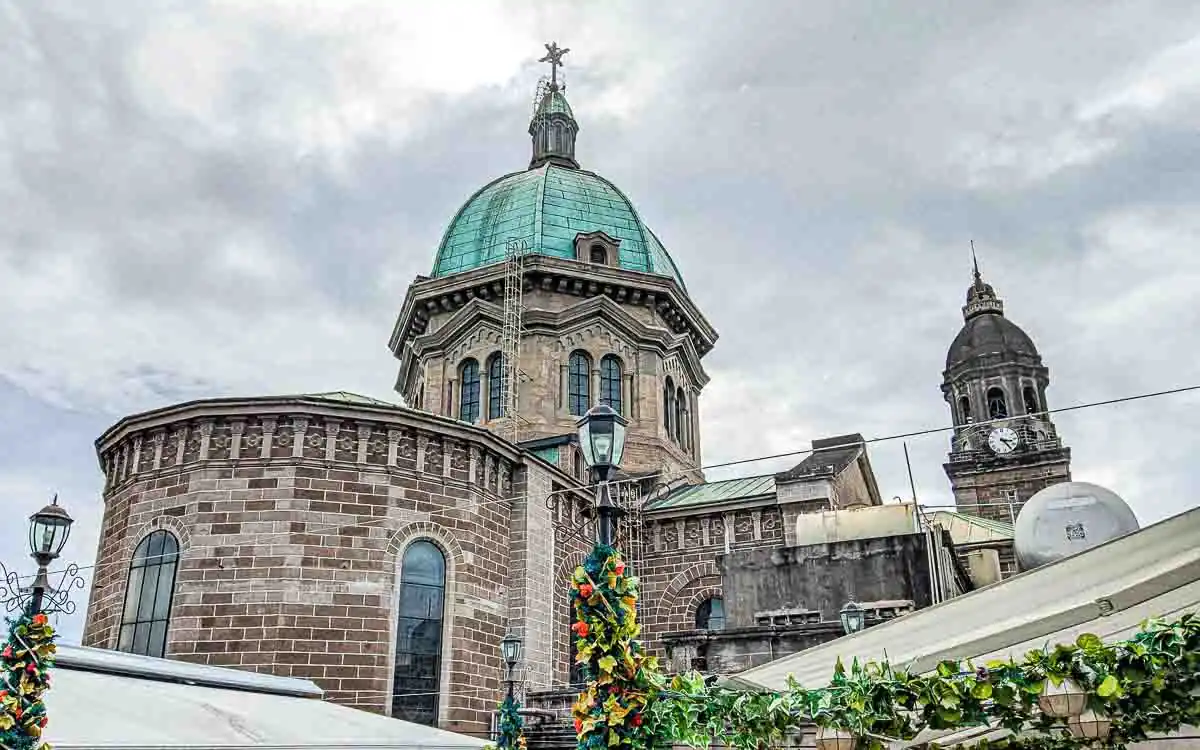
The Manila Cathedral, with its imposing neo-Romanesque facade, has been destroyed and rebuilt eight times throughout history. The current structure, completed in 1958, houses stunning German stained glass windows and an impressive pipe organ that still accompanies Sunday masses.
But San Agustin Church is the real architectural marvel. Built in 1607, it’s the oldest stone church in the Philippines and somehow survived World War II when most of Intramuros was reduced to rubble. The baroque interior features incredible trompe-l’oeil ceiling paintings and hand-carved wooden saints that have been watching over Manila for over 400 years.
The church earned its UNESCO World Heritage status in 1993, and you can understand why the moment you step inside. The Spanish colonial craftsmanship is simply breathtaking.
Casa Manila & Museums
Casa Manila recreates the lifestyle of wealthy Filipino families during Spanish rule. The restored colonial house showcases period furniture, china, and artwork, giving you a glimpse into how the ilustrado class lived. It’s small but well-curated, and the PHP 15 entrance fee makes it an easy add-on to any Intramuros visit.
The adjoining San Agustin Museum houses religious artifacts, antique vestments, and centuries-old manuscripts. Art lovers will appreciate the collection of santos (religious statues) carved from ivory and wood by Filipino artisans.
The Ancient Walls & Gates
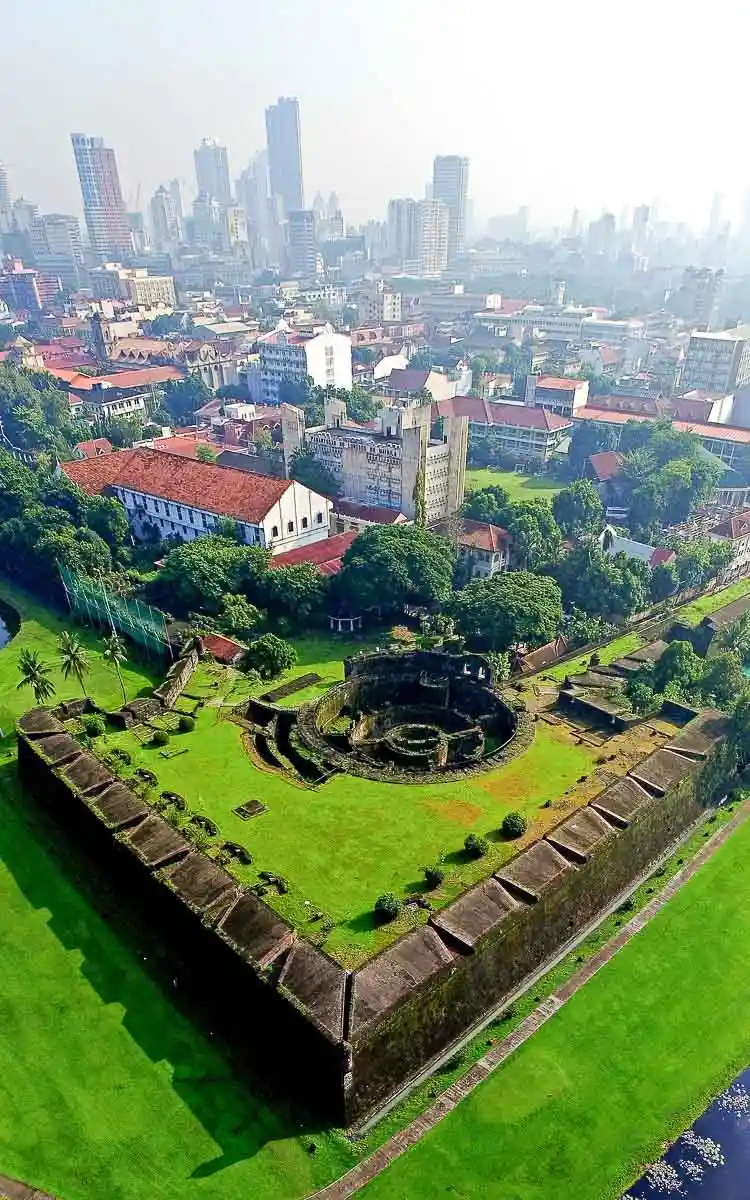
The walls themselves deserve as much attention as the attractions they protect. Built from volcanic stone blocks and stretching over 4 kilometers in their heyday, these fortifications once made Intramuros virtually impregnable.
Start at the Puerta del Parian (Chinese Gate) and walk along the top of the walls for panoramic views of Manila. The best preserved section runs from Fort Santiago to the Manila Cathedral, offering glimpses of both the historic district below and the modern city beyond.
Several original gates still stand, including Puerta de Isabel II and Puerta de Santa Lucia. Each has its own architectural style and historical significance—pick up a map at Fort Santiago to plan your wall-walking route.
Getting Around Inside Intramuros
Walking Routes & Maps
Intramuros covers just 67 hectares, making it completely walkable for anyone with decent mobility. The main sights form a rough triangle: Fort Santiago at the northwest tip, Manila Cathedral in the center, and San Agustin Church toward the southeast.
I recommend starting at Fort Santiago early morning, then working your way southeast through Plaza Roma to Manila Cathedral, finishing at San Agustin Church. This route takes about 2-3 hours and flows naturally with the district’s layout.
Free maps are available at Fort Santiago’s entrance, and most hotels in Manila also stock them. The streets are well-signposted in both Filipino and English.
Kalesa & E-trike Options
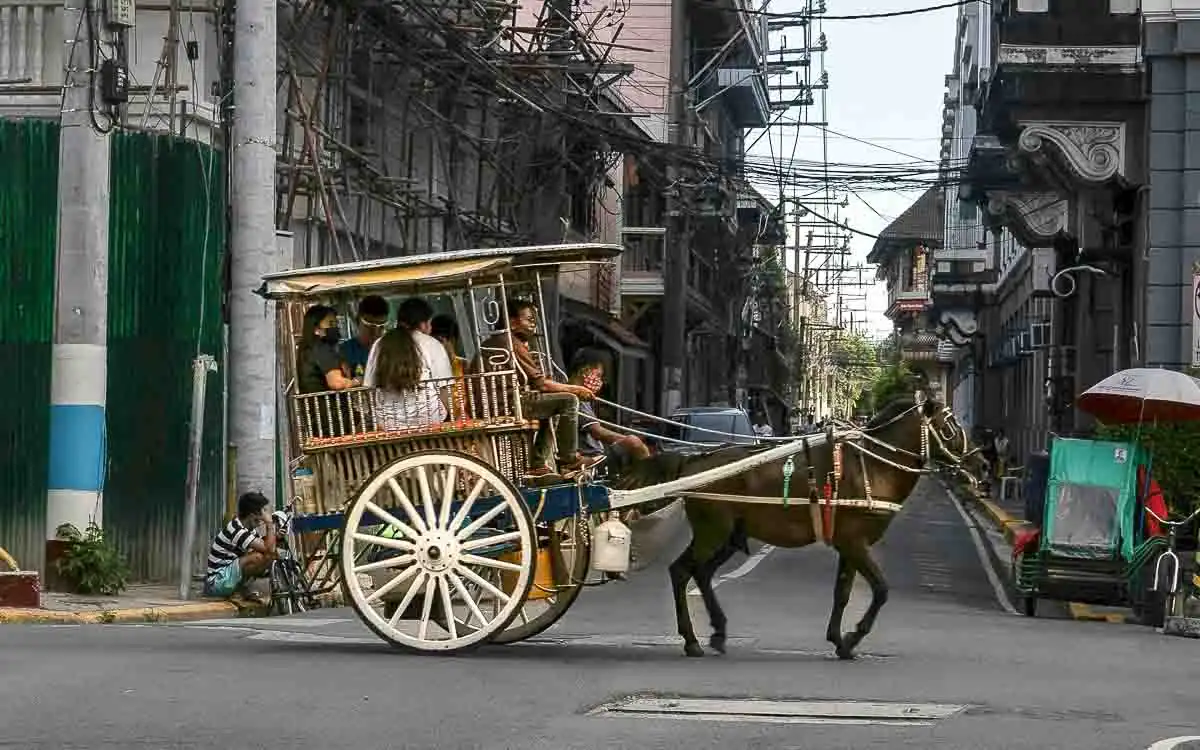
Nothing says “old Manila” quite like clip-clopping through the streets in a kalesa (horse-drawn carriage). These traditional carriages hold 2-3 people and offer guided tours lasting 15-45 minutes. I paid PHP 300 for a 15-minute ride that covered the main plaza area—touristy but fun.
For a more modern approach, try the electric trikes that launched in 2016. These three-wheeled vehicles follow a set route with 13 stops covering all major attractions. According to the Intramuros Administration, tickets cost PHP 150 for a full loop and can be purchased at booths near Manila Cathedral.
Bike Tours & Bamboo Bikes
The most unique way to explore Intramuros? Join a bamboo bike tour through Bambike Ecotours. These handcrafted bikes, built by local communities, offer an eco-friendly way to cover more ground while supporting a great cause.
Tours run daily and include stops at major attractions with commentary from local guides. You can book bamboo bike tours through GetYourGuide for around PHP 1,200 per person, including bike rental and guide. It’s perfect if you want exercise with your history lesson.
This post contains affiliate links. I earn a small commission if you book through these links at no extra cost to you, helping keep this content free and updated.
Where to Eat in Intramuros
Historic Restaurants with Heritage Ambiance
Ilustrado Restaurant, housed in a restored Spanish-era mansion, serves some of the best heritage cuisine in Manila. Their signature adobong bagnet (PHP 650) comes with a playful menu warning: “Please Be Careful with My Heart.” The sampaguita ice cream, made with real national flower petals, is unlike anything you’ll taste elsewhere.
Barbara’s Heritage Restaurant inside Casa Manila combines dining with entertainment. Their buffet lunch (PHP 800) includes a traditional Filipino dance show featuring the Singkil, Tinikling, and other folk performances. It’s touristy but genuinely entertaining.
Budget-Friendly Local Spots
For cheaper eats, look for the small eateries along General Luna Street. I found a family-run place serving excellent adobo and rice for just PHP 120. Street vendors near the major gates sell fresh buko (coconut water) for PHP 30—perfect for beating the heat.
Street Food & Snack Recommendations
The area around Fort Santiago has several vendors selling Filipino snacks. Try the banana cue (deep-fried banana on a stick, PHP 20) or fish balls with sweet and spicy sauce (PHP 15 for six pieces). Just use common sense about food safety—choose vendors with high turnover and hot food.
Photography & Instagram Guide
Best Photo Spots & Golden Hour Timing
The walls of Intramuros offer some of Manila’s best sunset photography opportunities. Position yourself near Baluarte de San Diego around 5:30 PM for shots of the walls silhouetted against colorful skies.
For morning golden hour shots, the courtyard of San Agustin Church catches beautiful side lighting around 7:30 AM. The Manila Cathedral steps also make for classic photos, especially with the contrast of old stone architecture against modern Manila’s skyline visible in the background.
Respectful Photography Tips
Remember that these are active religious sites. Photography is generally allowed in churches, but be discrete during masses and always ask permission before photographing people at prayer. Flash photography is prohibited in most museums to protect artifacts.
Many locals are happy to pose for photos, especially kalesa drivers and street vendors, but always ask first and consider tipping for posed shots.
Tours vs Independent Exploration
Guided Tour Benefits & Booking
While Intramuros is perfectly navigable on your own, guided tours add historical context that brings the stones to life. Local guides share stories you’d never learn from plaques—like which Spanish governors lived where and how families survived the 1945 Battle of Manila.
Professional walking tours typically last 3-4 hours and cost around PHP 1,500 per person. You can book verified Intramuros walking tours through GetYourGuide for skip-the-line access to attractions and expert commentary from local historians.
Self-Guided Route Suggestions
If you prefer exploring at your own pace, start early morning at Fort Santiago, spend 90 minutes there including the Rizal Shrine, then walk to Manila Cathedral via Plaza Roma (15 minutes). After visiting the cathedral, head to San Agustin Church and Museum (another 90 minutes), then finish with a walk along the walls.
This route takes about 4 hours including breaks and covers all the major highlights. Bring water, wear comfortable shoes, and don’t rush—half the charm of Intramuros is stumbling upon quiet courtyards and hidden architectural details.
Safety & Accessibility Tips
Solo Female Traveler Guidelines
Intramuros feels very safe during daylight hours. Tourist police patrol regularly, and there’s usually a steady stream of visitors around major attractions. I felt completely comfortable exploring alone as a female traveler, even in the quieter corners of the district.
Stick to the main streets after dark, and be aware that some sections get quite empty after 6 PM. The area around Fort Santiago stays busier longer due to the sunset crowd on the walls.
Mobility-Impaired Visitor Information
Unfortunately, Intramuros wasn’t designed with accessibility in mind. The cobblestone streets can be challenging for wheelchairs, and many historic buildings lack ramps or elevators. Fort Santiago has some paved paths, but the underground dungeons require stairs.
Manila Cathedral and San Agustin Church both have accessible entrances, though getting there might require assistance over uneven stones. Contact the Intramuros Administration in advance if you need specific accessibility information for your visit.
Nearby Attractions to Combine
Rizal Park & National Museum
Just a 10-minute walk from Intramuros brings you to Rizal Park, where the national hero was executed in 1896. The spot is marked by a simple monument that’s surprisingly moving in its understatement.
The National Museum complex nearby houses incredible collections of Filipino art, natural history, and anthropology. Entry is free for Filipino citizens and permanent residents, while foreign tourists pay PHP 150. It’s definitely worth combining with your Intramuros visit for a full day of Manila history and culture.
Manila Bay Sunset Spot
End your historical day with one of Asia’s famous sunsets at Manila Bay, just 15 minutes west of Intramuros. The baywalk offers unobstructed views of the sun melting into the South China Sea, with Intramuros’ silhouette visible behind you.
For those interested in extending their historical exploration beyond Manila, consider adding island hopping adventures to nearby Corregidor Island, where you can explore World War II tunnels and battlefields. It makes for a perfect complement to Intramuros’ Spanish colonial focus.
Balancing History with Modern Indoor Attractions
After exploring historic landmarks like Intramuros, travelers can balance their itinerary with modern indoor attractions in Manila such as the Space & Time Cube at SM North EDSA. This interactive illusion museum offers a futuristic experience that’s especially enjoyable for families and couples.
How much does it cost to visit Intramuros Manila?
Walking around Intramuros is free, but attractions charge separate fees. Fort Santiago costs PHP 30, San Agustin Museum PHP 50, Casa Manila PHP 15. Budget PHP 200-500 total for attractions plus transport and meals for a full day.
How long should I spend in Intramuros?
Plan 3-4 hours minimum to see main attractions like Fort Santiago, Manila Cathedral, and San Agustin Church. A full day is recommended if you want to include museums, dining, and detailed exploration of the walls and gates.
What’s the best time to visit Intramuros Manila?
Early morning (8-10 AM) offers cooler weather and better lighting for photos. Late afternoon (4-6 PM) provides gorgeous sunset views from the walls. Avoid the brutal midday heat (11 AM-2 PM), especially from March to May.
How do I get to Intramuros from NAIA Airport?
Take the Airport Loop bus to Baclaran, then LRT-1 to Central Terminal Station. Walk 10 minutes to the Intramuros gates. Alternative: Grab ride takes 45-60 minutes and costs PHP 300-500 depending on traffic and which terminal you’re coming from.
Is Intramuros Manila safe for tourists?
Yes, Intramuros is very safe during daylight hours with tourist police and security guards present throughout the district. Solo female travelers should stick to main areas after dark. Keep valuables secure and stay aware of your surroundings like any tourist area.
Can I explore Intramuros without a tour guide?
Absolutely. Intramuros is compact and well-signposted in both English and Filipino. Pick up free maps at Fort Santiago’s entrance. Self-guided walking takes 3-4 hours and covers all major attractions. Guided tours offer deeper historical context but aren’t necessary for basic sightseeing.
Intramuros proved to be one of those rare destinations that exceeded every expectation. What started as a quick historical checkbox became a full day of discovery, and I left with a genuine appreciation for how Manila has preserved this incredible slice of its colonial past. The contrast between ancient stones and modern skylines, between horse carriages and jeepneys, creates something truly special that you won’t find anywhere else in Southeast Asia.
Whether you’re a history buff fascinated by Spanish colonial architecture, a photographer hunting for that perfect golden hour shot, or just someone curious about the Philippines’ complex past, Intramuros delivers on every level. For travelers seeking even deeper traditional Filipino cultural experiences, the Philippines has incredible indigenous communities to discover beyond Manila’s colonial heritage. Just remember to start early, bring water, and leave enough time to simply wander and soak it all in.
Disclosure: This post may contain affiliate links. If you click through and make a purchase, we may earn a small commission at no extra cost to you. Thank you for your support!
If you’re heading out of Manila after Intramuros, consider pairing it with Corregidor Island for a WWII history day trip, or head north to the mountain village of Buscalan for a traditional tattoo session with Apo Whang-od.
Leave a Reply