

Getting a traditional tattoo from the world’s oldest living tattoo artist isn’t just about the ink—it’s about connecting with centuries of Filipino heritage. My journey to Buscalan village in Kalinga province to meet Apo Whang-od turned into one of the most meaningful travel experiences I’ve ever had.
After our unforgettable Sagada adventure exploring Echo Valley and Bokong Falls, we decided to venture deeper into the Cordillera mountains. None of us had ever gotten a tattoo before, but something about the idea of receiving one using ancient techniques from a living legend felt incredibly special.
Table of Contents
Why Buscalan Village is the Ultimate Traditional Tattoo Destination
Buscalan village sits high in the mountains of Tingalayan, Kalinga, like a hidden gem waiting to be discovered. This small community of roughly 200 residents has become a pilgrimage site for travelers seeking authentic cultural experiences and traditional tattoos.
Who is Apo Whang-od? The Legend Behind the Art
Apo Whang-od, born Maria Oggay on February 17, 1917, is now 108 years old and represents the last generation of traditional mambabatok (tattoo artists) in the Philippines. She began tattooing at age 16 under her father’s guidance and has spent over 90 years perfecting the ancient art of batok.
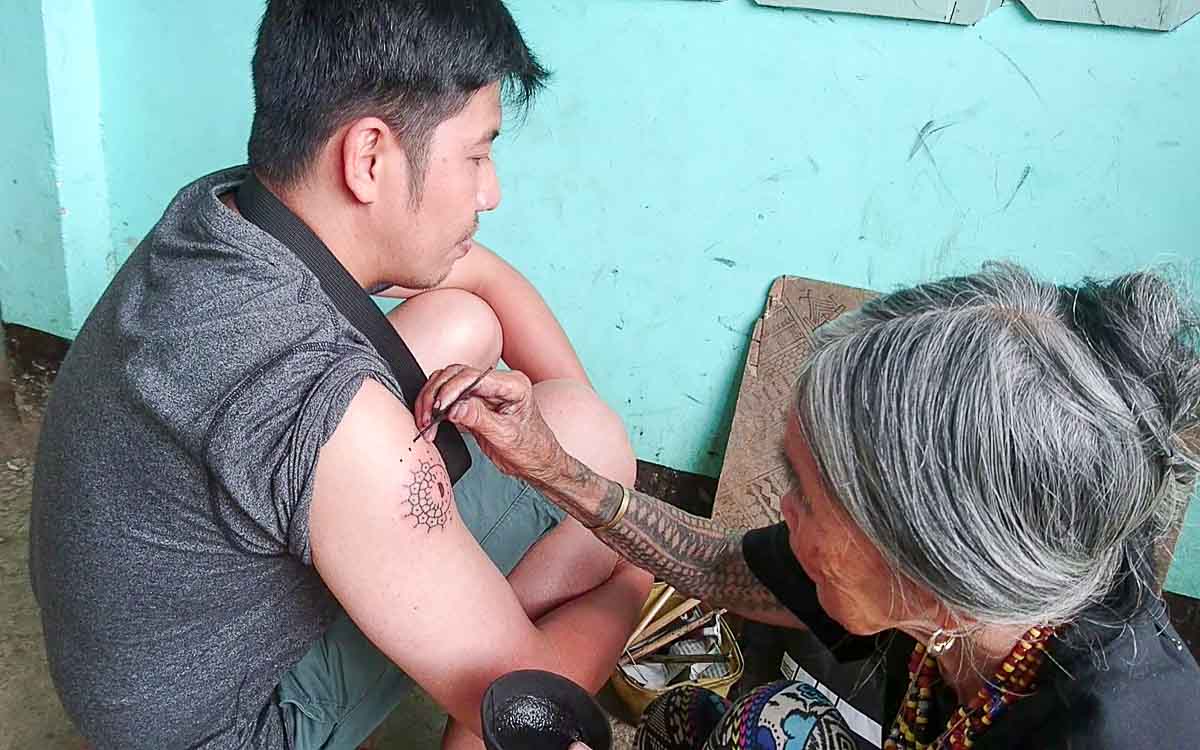
What makes Whang-od extraordinary isn’t just her age—it’s her role as a cultural guardian. In 2023, she became the oldest person ever to grace the cover of Vogue Philippines at 106, bringing international attention to this disappearing art form. Her story reached global audiences, but for locals, she’s always been a treasure.
The UNESCO recognizes traditional tattooing as intangible cultural heritage, and Whang-od serves as its living embodiment. She’s trained her grandnieces Grace Palicas and Elyang Wigan to carry on the tradition, ensuring the bloodline requirement of mambabatok inheritance continues.
The Sacred Art of Batok Hand-Tapped Tattoos
Traditional batok tattoos aren’t just decorative—they’re deeply spiritual and cultural markers. In Kalinga society, tattoos traditionally indicated social status, bravery in battle, and important life milestones. Warriors earned specific designs for their courage, while women received patterns that enhanced their beauty and marked their achievements.
The process uses a pambatok—a bamboo stick with pomelo or calamansi thorns attached—to tap a mixture of charcoal and water into the skin. This ancient technique creates a distinctive look and feel that’s impossible to replicate with modern machines.
How to Get to Buscalan Village: Complete Travel Guide
Getting to Buscalan requires commitment. The village sits approximately 400 kilometers north of Manila, and the journey involves multiple transportation modes plus a challenging hike.
Transportation Options from Manila and Baguio
From Manila (12-15 hours total):
- Via Tabuk City: Take Victory Liner from Kamias terminal to Tabuk City (overnight bus, 10-12 hours). From Tabuk, ride a jeepney to Bugnay, then a habal-habal motorcycle to the jump-off point.
- Via Bontoc: Take Coda Lines from Cubao to Bontoc (12 hours overnight). From Bontoc, jeepney to the Buscalan jump-off point.
From Baguio (8-10 hours total): Take a bus from Slaughterhouse Terminal to Bontoc (6 hours), then jeepney to the jump-off point.
Guided Tour Packages: For first-time visitors, I highly recommend booking a tour package. These typically cost PHP 8,000-12,000 per person and include transportation, guide services, and homestay accommodation. The convenience is worth the extra cost, especially if you’re unfamiliar with Philippine public transport.
The Trek to Buscalan: What to Expect
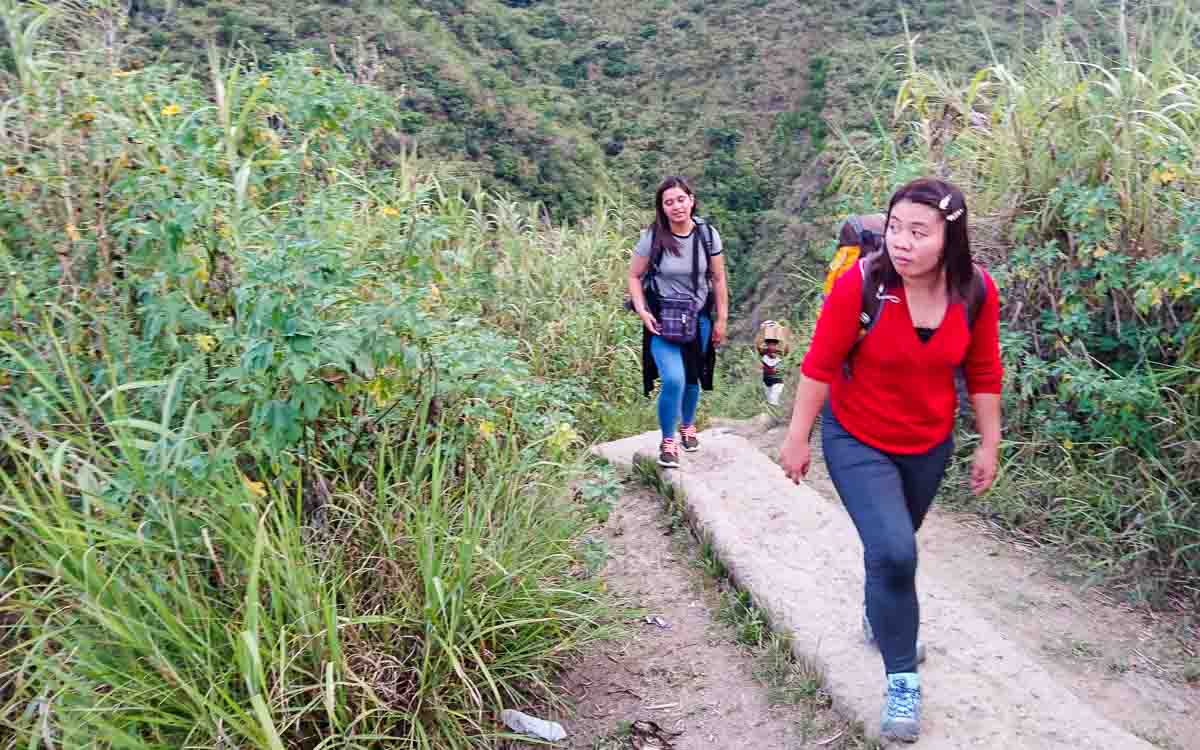
The final 30-45 minute hike to Buscalan is the most challenging part. The trail is steep, rocky, and can be slippery during rainy season. You’ll need:
- Good hiking shoes with grip
- Light backpack (under 10kg)
- Water and snacks
- Local guide (mandatory)
Guide fees cost PHP 1,000 for day trips or PHP 1,500 for overnight stays, covering up to 5 people. We were lucky to find a villager at the jump-off point who agreed to guide us, but it’s better to arrange this in advance.
Buscalan Tattoo Experience: Costs, Process & What to Expect
Understanding the costs and process before arriving helps set proper expectations and ensures you budget correctly.
Traditional Tattoo Pricing Guide 2025
The Philippines Department of Tourism doesn’t regulate tattoo prices in Buscalan, so costs vary based on design complexity and the artist.
Current Pricing Structure:
- Apo Whang-od’s signature three-dot tattoo: PHP 300
- Small traditional designs: PHP 300-500
- Medium designs: PHP 1,000-3,000
- Large, intricate designs: PHP 5,000-50,000
- Pambatok (tattoo tool): PHP 200 (yours to keep)
- Photo with Apo Whang-od: PHP 100 minimum
Additional Fees:
- Environmental fee: PHP 75
- Eco-cultural tourism fee: PHP 75
- Guide fee: PHP 1,000-1,500
- Homestay: PHP 350-500 per night
Tattoo Designs and Their Cultural Meanings
Traditional Kalinga tattoos aren’t random patterns—each design carries specific cultural significance:
Popular Designs:
- Three dots: Whang-od’s signature representing herself, her legacy, and tradition’s continuity
- Eagle/Bird motifs: Representing freedom and spiritual guidance
- Geometric patterns: Symbolizing life’s interconnectedness
- Centipede design: Protection from evil spirits
- Mountain patterns: Connection to ancestral lands
The Hand-Tapped Tattoo Process Explained
The traditional tattooing process is mesmerizing to watch. The artist dips the pomelo thorn into charcoal ink and taps it into the skin using rhythmic, precise movements. Each tap deposits a tiny amount of ink, building the design dot by dot.
The pain level is intense—more so than machine tattoos because the thorn penetrates skin repeatedly in the same area. However, most people find it tolerable, and the cultural significance makes any discomfort worthwhile.
My Personal Traditional Tattoo Experience with Apo Whang-od
Given the crowds that day, we arranged for our tattoos at night and early morning to maximize our time before catching the jeepney back to Bontoc.
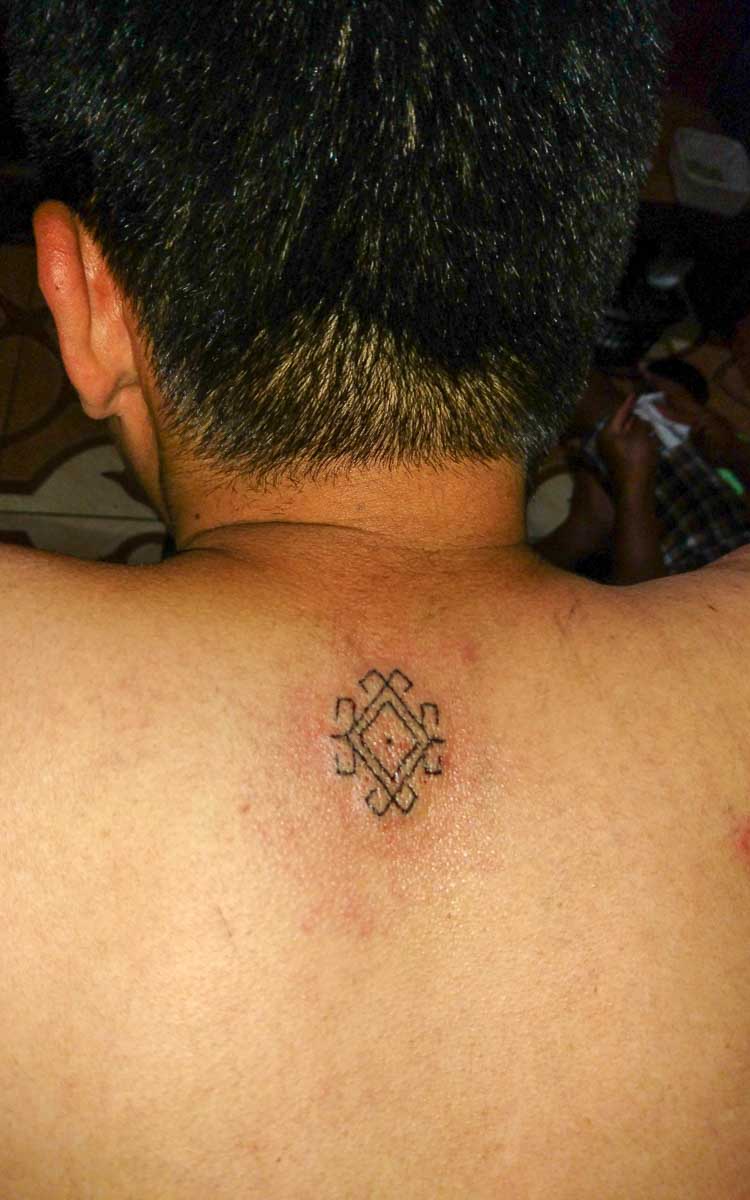
Getting the “Traveler” Design: Night Session
I chose the “Traveler” symbol for my first tattoo—a meaningful design representing my journey through life and love for exploration. The night session had a magical quality, with oil lamps casting dancing shadows while the artist worked.
The pain was sharp and consistent, like tiny needles repeatedly pricking the skin. But watching the design emerge dot by dot was hypnotic. The entire process took about 20 minutes, and I was amazed by the precision achieved using such simple tools.
Sun and Moon Tattoo: Early Morning Experience
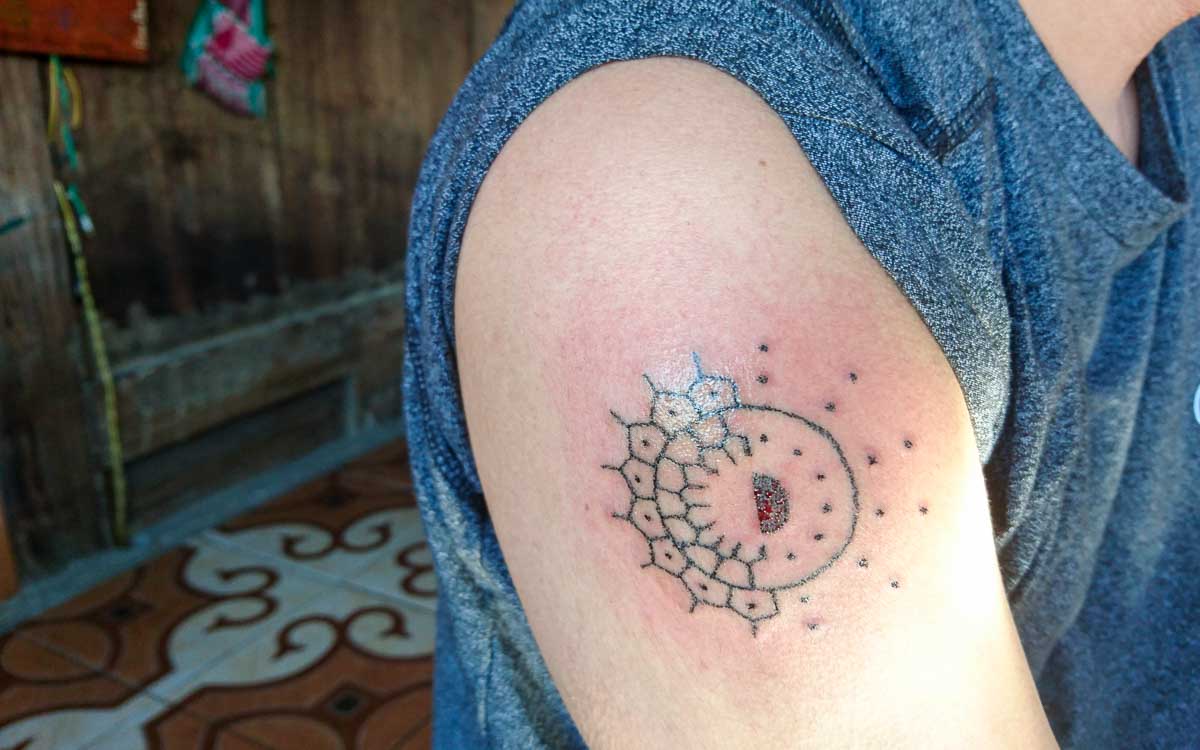
My second tattoo came at sunrise—a sun and moon design symbolizing balance and life’s cyclical nature. Getting tattooed as the village awakened felt incredibly special. Birds chirped in the distance, coffee brewed in nearby huts, and the mountains glowed with golden light.
This design was more complex, taking about 45 minutes. The artist—one of Whang-od’s grandnieces—explained each element’s significance as she worked. Her skill was remarkable, creating perfect circles and symmetrical patterns using only hand-eye coordination.
Meeting the Living Legend
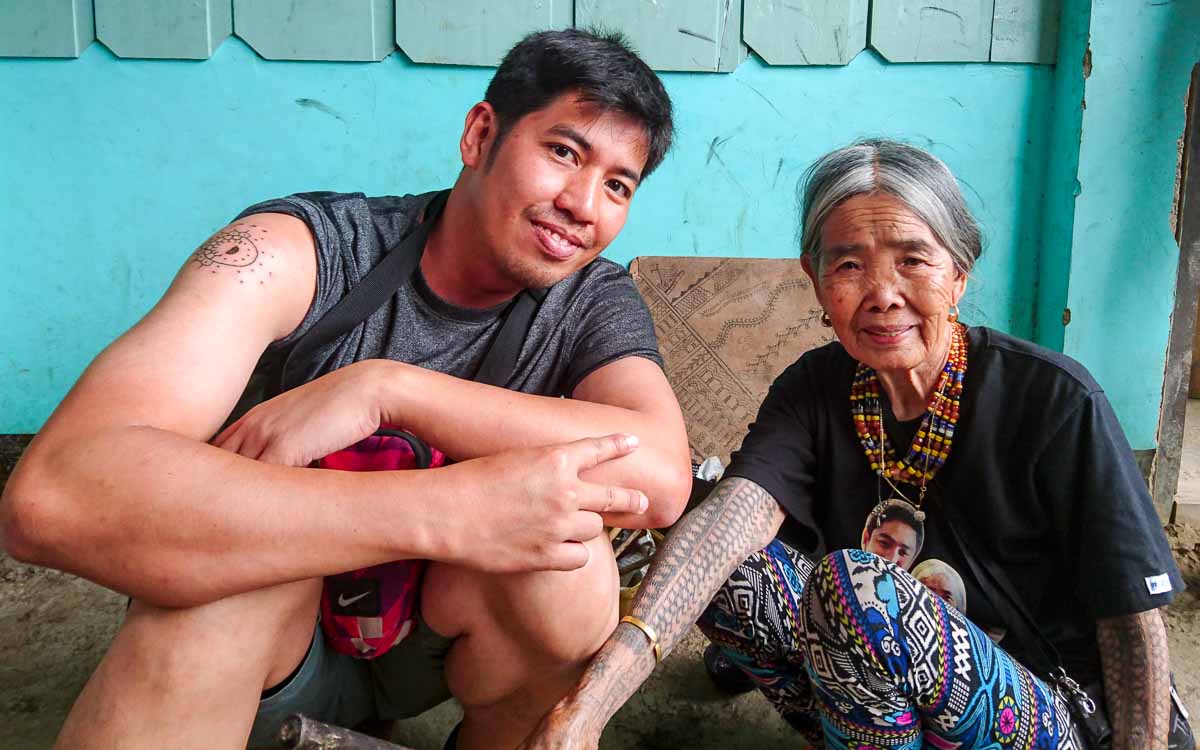
Actually meeting Apo Whang-od was surreal. Despite her age, her eyes remained sharp and focused. She examined our fresh tattoos with approval, nodding and smiling. Through our guide’s translation, she shared stories about the old days when tattoos marked warriors and important life events.
Taking photos with her felt like capturing history. Here was someone who remembered pre-war Philippines, who learned tattooing when it was purely functional, and who now witnesses its transformation into cultural tourism. Her presence connected us to something much larger than ourselves.
Where to Stay in Buscalan: Homestay Guide
Buscalan doesn’t have hotels or resorts—only homestays that offer authentic cultural immersion.
Accommodation Options and What’s Included
Homestays typically include:
- Basic sleeping arrangements (mattress, bedding, pillow)
- Unlimited Kalinga coffee (strong and delicious!)
- Use of kitchen facilities
- Cultural interaction with host families
Rates range from PHP 350-500 per night. Don’t expect luxury—these are simple mountain homes with basic amenities. Some have electricity from solar panels or generators, but power isn’t guaranteed.
What to Expect from Village Life
Life in Buscalan revolves around simplicity and community. Roosters wake you at dawn, coffee brews in large pans with brown sugar, and conversations happen on bamboo porches overlooking rice terraces.
The lack of internet and weak cell phone signal initially felt challenging, but it became liberating. Without digital distractions, we engaged more deeply with locals, learned about their customs, and appreciated the mountain’s peaceful rhythm.
Essential Tips for Your Buscalan Tattoo Journey
Proper preparation makes the difference between a memorable adventure and a difficult experience.
What to Pack for the Trek
Essential Items:
- Cash (PHP 15,000-20,000 recommended—no ATMs available)
- Comfortable hiking shoes
- Light daypack
- Water bottles and snacks
- Power bank and charging cables
- Basic first aid kit
- Antibacterial soap and hand sanitizer
- Quick-dry clothing
- Rain jacket (essential during wet season)
- Headlamp or flashlight
Tattoo Aftercare:
- Antibacterial soap
- Clean towels
- Loose, breathable clothing
Best Time to Visit Buscalan
Dry Season (December-May): Ideal weather, clear trails, and better road conditions. However, this is peak season, so expect more tourists.
Wet Season (June-November): Fewer crowds but challenging weather. Trails become muddy and slippery, and transportation can be disrupted.
Weekday vs. Weekend: Weekdays generally have shorter queues for tattoos and more relaxed village atmosphere.
Cultural Etiquette and Respect
Buscalan remains a living community, not a theme park. Respectful behavior includes:
- Asking permission before photographing locals
- Dressing modestly
- Not touching sacred items or areas without permission
- Being patient with the tattooing process
- Supporting local economy through purchases and tips
- Learning basic Tagalog phrases
Beyond Tattoos: Other Buscalan Village Experiences
Even visitors not getting tattoos find plenty to appreciate in Buscalan.
Rice Terraces and Natural Attractions
The village’s rice terraces are spectacular, especially at sunrise and sunset. These ancient agricultural systems, still actively farmed, demonstrate the Kalinga people’s harmony with their environment.
A small waterfall near the village offers refreshing swimming opportunities after the hot trek. The natural pool is perfect for cooling off, though water levels vary seasonally.
Local Coffee and Traditional Food
Buscalan coffee deserves special mention. Grown locally and prepared in traditional style—boiled in large pans with brown sugar—it’s strong, aromatic, and incredibly satisfying after the mountain trek.
Traditional foods include:
- Etag: Smoked or air-dried pork, a regional delicacy
- Red rice: Locally grown variety with nutty flavor
- Fresh vegetables: From village gardens
- Pinikpikan: Traditional chicken soup (when available)
Combining Buscalan with Other Cordillera Adventures
Buscalan works perfectly as part of a larger Cordillera mountain adventure. After our thrilling spelunking adventure in Sagada’s famous caves, the cultural immersion of Buscalan provided a different but equally meaningful experience.
If you’re planning more mountain adventures in the Cordilleras, check out our guide to hiking Kamanbaneng Peak and Kaman-Utek Hills for spectacular sunrise views and challenging trails.
Other nearby destinations include:
- Sagada: Famous hanging coffins and caves
- Banaue: World-famous rice terraces
- Baguio: Summer capital with cooler climate
- Vigan: UNESCO World Heritage Spanish colonial town
Frequently Asked Questions About Buscalan Traditional Tattoos
How much does a traditional tattoo from Apo Whang-od cost?
Apo Whang-od’s signature three-dot tattoo costs around PHP 300. Smaller traditional designs start at PHP 300-500, while larger, intricate designs can cost up to PHP 50,000. You’ll also need to purchase a pambatok (tattoo tool) for PHP 200.
How long does it take to get a traditional tattoo in Buscalan?
Simple designs like the three-dot signature take about 5 minutes. Small traditional patterns take 10-30 minutes, while complex designs can take several hours or multiple sessions.
Is it guaranteed that Apo Whang-od will tattoo me?
No, there are no appointments. Tattoos are done first-come, first-served. Due to her age, Apo Whang-od mainly does her signature three-dot tattoo, while her grandnieces Grace and Elyang handle larger designs.
How painful are traditional hand-tapped tattoos?
Traditional batok tattoos are generally more painful than machine tattoos because the pomelo thorn taps repeatedly into the skin. However, most people find the pain tolerable and consider it part of the meaningful experience.
What should I bring to Buscalan village?
Bring cash (no ATMs available), comfortable hiking gear, basic toiletries, power bank, water, and snacks. Pack light as you’ll need to hike 30-45 minutes to reach the village.
When is the best time to visit Buscalan?
The dry season (December to May) offers the best weather and road conditions. Weekdays are less crowded than weekends.
How do I get to Buscalan village?
From Manila, take a bus to Tabuk City or Bontoc, then a jeepney to the jump-off point, followed by a 30-45 minute uphill hike. Guided tour packages are recommended for first-time visitors.
Can I visit Buscalan without getting a tattoo?
Absolutely! You can experience the culture, meet the locals, explore rice terraces, try local coffee, and learn about traditional practices without getting tattooed.
Is it safe to get a tattoo in Buscalan?
Yes, when proper precautions are taken. Each artist uses new tools for every client, and hygiene standards are generally good. However, ensure you follow proper aftercare to prevent infection.
How long should I stay in Buscalan?
Most visitors stay 1-2 nights. This allows time for the tattoo experience, cultural immersion, and rest before the return journey. Longer stays are recommended for complex tattoo designs.
Final Thoughts on the Buscalan Traditional Tattoo Experience
My traditional tattoo experience in Buscalan exceeded every expectation. Beyond the ink itself, the journey provided profound cultural connection, unforgettable memories, and lasting friendships with fellow travelers and locals.
The “Traveler” and “Sun and Moon” designs on my arms now serve as permanent reminders of this incredible adventure. Every time someone asks about them, I get to share the story of an ancient art form, a remarkable woman, and a mountain village where tradition thrives.
Getting a traditional tattoo from Apo Whang-od or her apprentices isn’t just about body art—it’s about participating in living history. In a world where authentic cultural experiences become increasingly rare, Buscalan offers something truly special.
Whether you’re a tattoo enthusiast, cultural explorer, or adventurous traveler, the journey to Buscalan village promises to be transformative. The memories and connections made there will last far longer than the brief discomfort of the tattooing process.
For more information about visiting the Philippines and planning your Cordillera adventure, check out the CNN’s feature on Whang-od and Vogue Philippines’ groundbreaking cover story that brought international attention to this remarkable cultural treasure.
Ang ganda ng meaning ng tattoo mo! I wanna try also kaso natatakot ako. Sobrang sakit kasi ata. Baka di ko kayanin. Hehehe tsaka gusto ko rin mameet si Whang Od.
Thanks. It depends upon your pain tolerance. try the 3 dot signature of Whang Od.
I still don’t have the guts to have any tattoo! If I would, I would love to have a moon shape as it’s been my favorite since I was a kid pa. So brave of you to have a traditional tattoo with THE Apo Whang-od!
Thanks. 🙂
I haven’t tried to get a tattoo and I still have no plans to get one but I want to visit Buscalan because of their culture and experience going there. It looks like Buscalan is really worth it. Hope to visit it soon.
Buscalan is really nice place although it is long ride and hike. Hope you can visit it.
i love Kalinga ?